Our technology
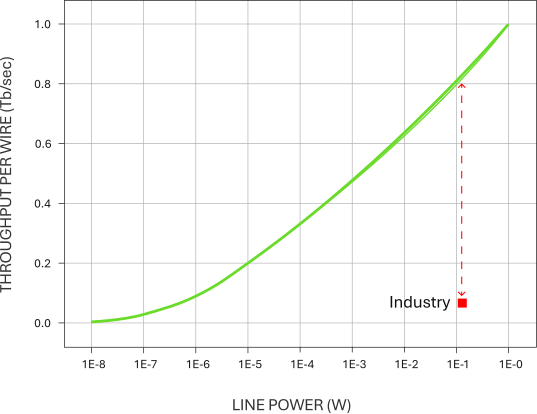
Copper carries only ~10% of what Shannon says it can. We spent 14 years helping the industry unlock the other 90%.
Link solutions that uniquely sit at the intersection of information theory and semicoductors (SerDes). The only technology in the world that taps into the full potential of copper and closes the gap.
TRADITIONAL COPPER LINKS
- At 200 mm of PCB trace, traditional chip-to-chip links suffer from crosstalk and other noise.
- At AI application speeds, received signals are garbled beyond recognition.
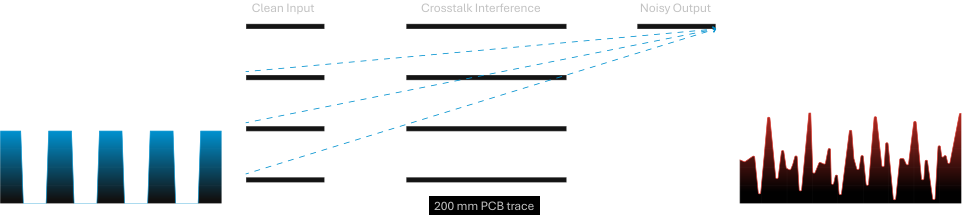
Kandou AI’s Copper MIMO Links
- Delivers a clean signal over the same 200 mm of PCB trace.
- Using MIMO techniques, interference is turned into an asset and its energy is harnessed to boost the signal.
- Mathematical design of signaling techniques + low-power analog circuit design unlocks capacity and extends reach.

Copper MIMO Links
Copper MIMO extends high-bandwidth, low-latency, power-efficient chip-to-chip connectivity across the PCB, enabling tightly interconnected multi-chip architectures beyond the confines of a single package.
GlasswingTM
Our die-to-die links are licensed by customers worldwide and power our market leading Retimer and Switch product lines
TigerwingTM
Our next generation, silicon proven, Chip-to-Chip link technology is powering our upcoming revolutionary, new AI connectivity products
Degrees of design freedom that supercharge our interconnect performance - Baud Rate | Modulation schemes (PAM, etc.) | Proprietary encoding schemes unlocking capacity | Industry leading low latency FEC.
variety and severity of signal lost
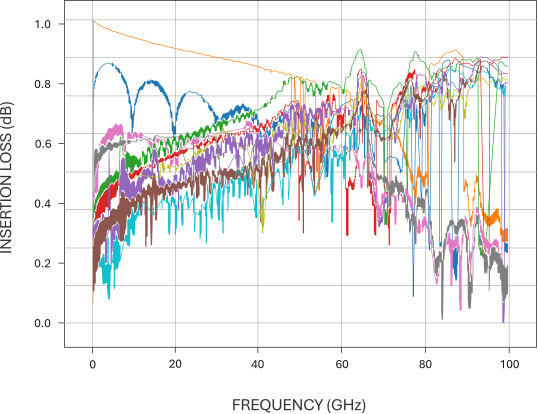
higher data throughput unlocked
Application of the technology
From die-to-die to rack-level connectivity, Kandou’s Copper MIMO and other interconnect technologies enable high-performance connections across AI infrastructure, with proprietary innovation built in and standards-based interfaces for easy integration.
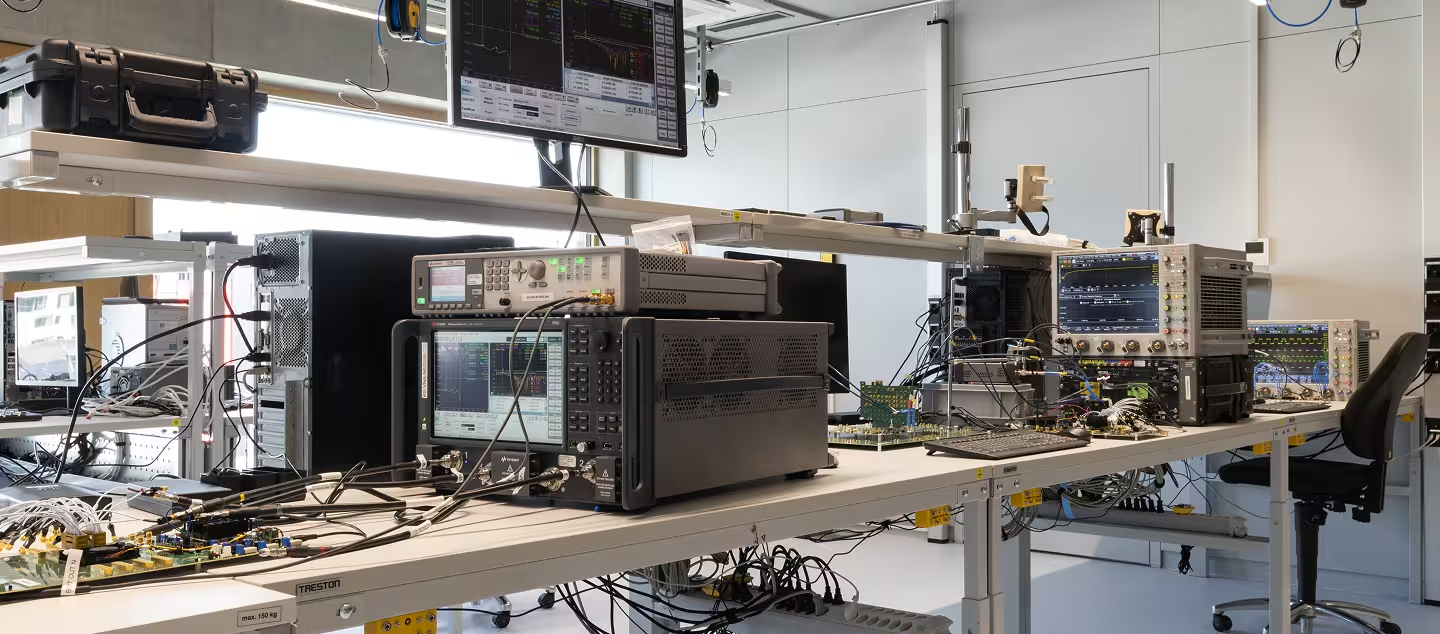
Three disciplines that make this possible
Unlock Capacity
Innovative signal encoding techniques that unlock copper’s capacity
System Designer's Dream
Novel SerDes Design brought to life by our world-class team of Analog, Mixed-Signal and Digital designers specializing in energy-efficient, high-speed SerDes implementation
Powering AI Infrastructure
Groundbreaking AI systems built atop our proprietary link technologies to solve key bottlenecks in today’s AI datacenters
Tools to explore Chord Signaling
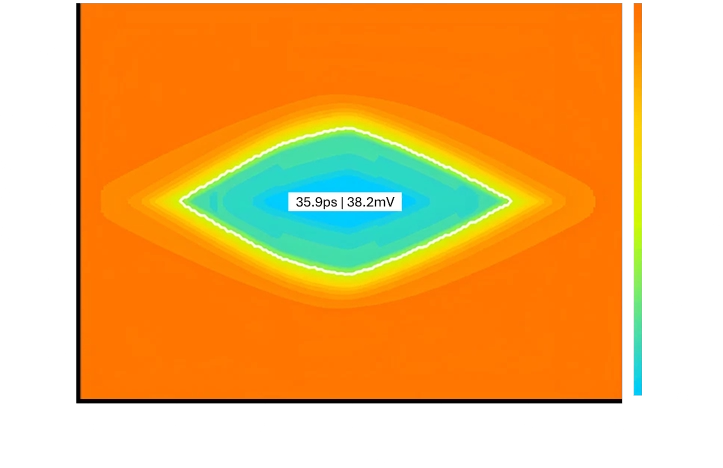
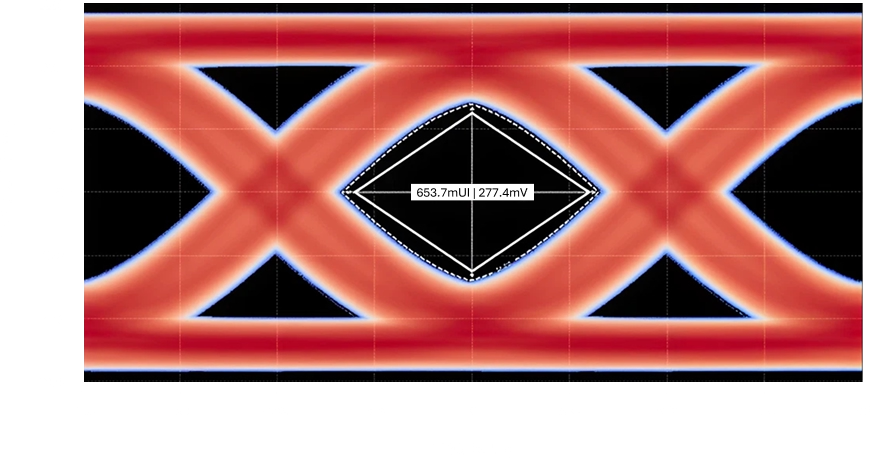
KEYETM
Fully develop in-house, KEYE is our GUI-based statistical eye simulator. With support for various Chord Signaling techniques – including ENRZ and CNRZ-5 – it is ideal for exploring the interaction between transceivers and channels
TAUTM
Also developed in-house, TAU is our GUI-based time-domain SerDes modeling tool. Perfect for investigating the behavior of adaptation loops on transceivers, it supports short and fast simulation times for a time-based simulator